5 Restaurant Marketing Moves to Fill Your Tables (Not Just Your Feed!)
Between posting on Instagram, running Meta ads, and watching your follower count climb, it's easy to assume the marketing is working. But if none of that is translating into a busier dining room on a Tuesday night, then the issue usually isn't effort or budget. We’re seeing that most restaurant marketing gets built around what's supposed to work instead of where your actual guests make the decision to show up. Here are five moves that close that gap, without spending a dollar more than you already are!

Here’s the Data
Word of mouth and simply driving or walking past a location are still the two biggest ways people find new restaurants, but everything after that is getting more digital and more fragmented by the year. Toast's 2026 survey of over 1,400 U.S. diners found that guests are trying new restaurants far more often than they were a year earlier, and that the channels leading them there are increasingly online rather than word of mouth alone.
Video is a big part of that shift. Meta has reported measurable YOY growth in time spent watching video on Instagram, with its ranking system leaning more on relevance and shareability than on how many followers an account already has. In practice, that gives a well targeted small restaurant with strong content a real shot at reach that used to require a much bigger following.
1. Audit Where Your Ad Traffic Lands
Most restaurants run ads without ever asking a basic question: what happens in the ten seconds after someone clicks? If that click lands on a slow website, a menu buried three pages deep, or a homepage with no clear next step, you're paying for attention that is immediately lost. This one of the most overlooked leaks in restaurant marketing. You can have great creative and a well targeted audience and still see nothing come of it, because the destination was never built to turn curiosity into a visit.
Worth checking before you spend another dollar on ads:
Does your website load in under three seconds on a mobile device?
Can someone find your menu, hours, and a reservation link in one tap from the homepage?
Is there a clear, single call to action, or are you asking people to choose between five things at once?
2. Consider Sending Ad Traffic to Social Instead of Your Website
This one tends to surprise people, but it's often the best fix available. If your website isn't ready to convert and rebuilding it isn't realistic this quarter, try redirecting your ad traffic to your Instagram or Facebook page instead! A strong social page full of real food photography, video, and an active comment section can do more to convince someone to show up tonight than a static website ever will! You want to send people wherever they're most moved to act.
3. Rebuild Your Content Around the First Three Seconds
Static carousels and posed food shots are easy to scroll past. What tends to stop the scroll is video with a strong hook in the first frame with people and text overlays that tell someone exactly what they’re looking for! The content that drives visits is rarely the most polished; it's the content that makes someone picture themselves in your dining room.
A few things worth prioritizing in your next round of content:
Lead with people and energy rather than empty rooms or plated food with no context
Use the first frame to answer "what am I looking at" before someone has a reason to keep scrolling
Show the food or drink being consumed, not just staged, whenever you can!
4. Tighten Your Targeting Before You Touch Your Budget
When ads aren't performing, the instinct is usually to spend more. More often, the better move is to spend the same amount with more precision. Broad targeting spreads your budget across people who were never going to book a table to begin with. Narrowing around the interests, behaviors, and location radius of your actual guest, then expanding carefully from there, tends to produce sharper results than simply increasing spend on an imprecise audience. Before raising your ad budget, it's worth asking whether the real issue is reach, or whether it's who you're reaching.
5. Track the Signal That Actually Matters: Demand You Can't Keep Up WithYour most credible trust signal
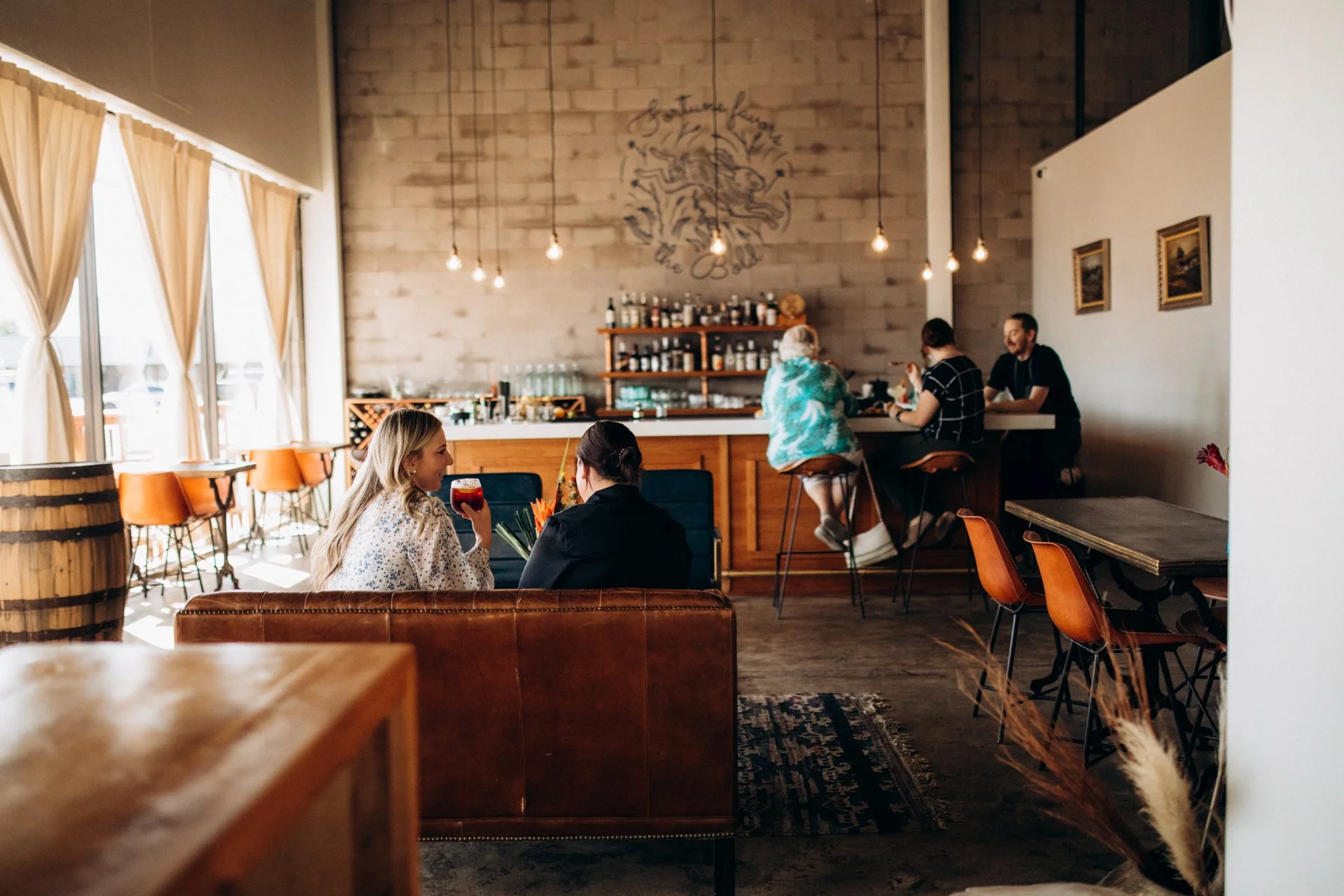
Likes and impressions feel good, but they aren't proof your marketing is working. The real signal is operational (like wait lists on nights that used to be quiet, a private event inquiry that wouldn't have come in six months ago, a bar that needs to open earlier because the crowd downstairs won't thin out, etc). When your marketing is working, it tends to show up as a problem you're happy to have. If your marketing has never created that kind of pressure, that's usually the clearest sign it's time to look at the funnel rather than just the content.
We've Seen This Play Out With Our Own Clients
We recently made this exact shift for a client, redirecting their ad traffic away from a website that wasn't converting and toward their social pages, tightening targeting without touching their budget, and rebuilding their content around video instead of static posts. The result was a dramatic jump in engagement and CTR, a big drop in cost per click, and enough new demand that they had to open an entire second bar just to keep up with happy hour crowds!
We're seeing the same pattern play out with other clients too, which is exactly how we know it's a repeatable framework rather than a fluke. You can read the full breakdown, including the numbers, in our case study.
So like, what do you do with this?
You don't need to overhaul everything at once! Start by picking whichever weak link is most likely costing you bookings right now. Whether that's a website that can't convert, content that doesn't hook, or targeting that's too broad to be efficient, and fix that first. The goal is a marketing ecosystem where every piece is pointed at the same outcome: a fuller dining room!
Ready to Turn Your Marketing Into a Full Dining Room?
Here at Pollinate Marketing, we build data-driven strategies for boutique hotels and restaurants, with clear tracking from marketing spend to bookings and revenue. No vanity metrics, no guesswork.
📩 Schedule a Discovery Call │ ✉️ Sign Up for Our Newsletter